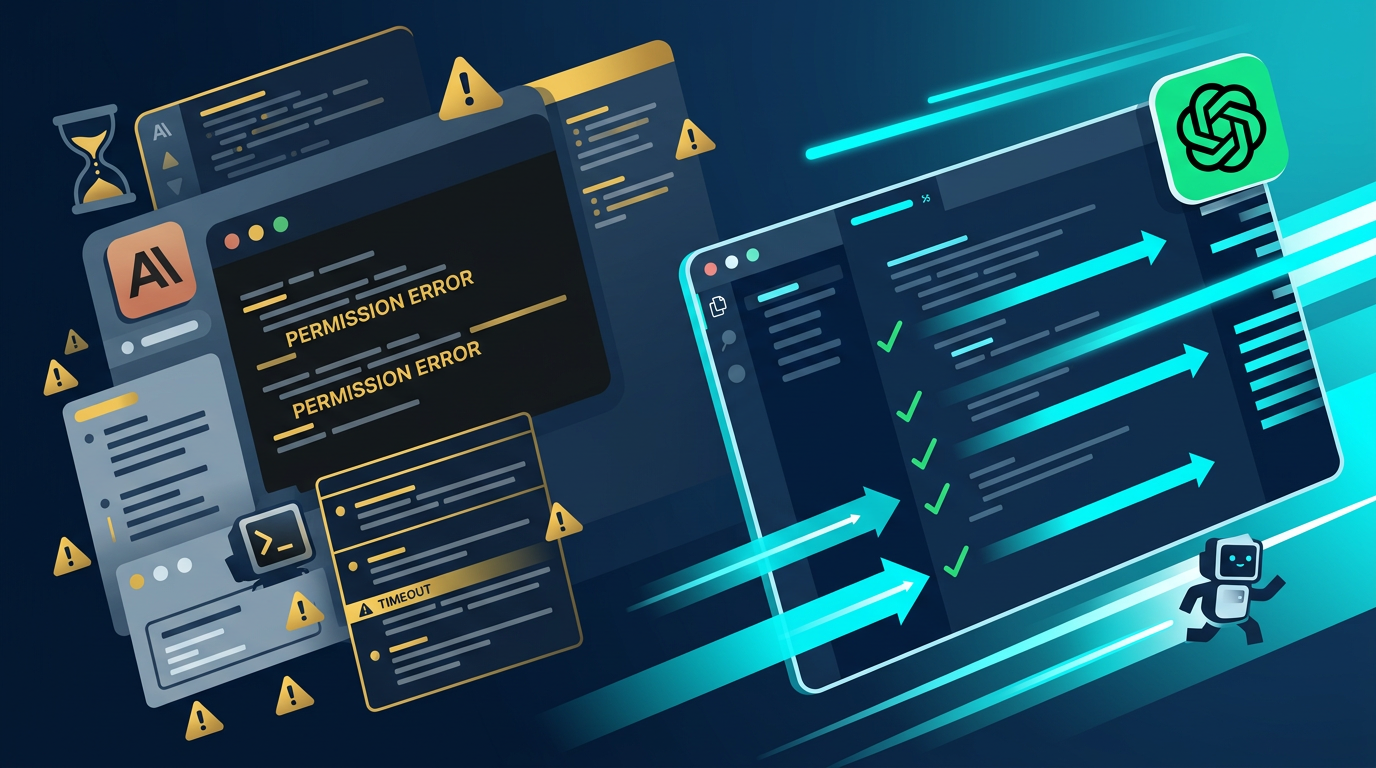



Claude Code is running into a problem that matters as much as benchmarks: developer confidence. Over the past day, a visible stream of posts on X has framed Anthropic’s coding product as slower, more hesitant, and more frustrating than it was even a few weeks ago, while OpenAI Codex is increasingly being described as the faster and more reliable option for real coding work.
That does not yet amount to a measured market share shift. But in AI developer tools, public sentiment among power users often acts as an early signal. When influential builders start describing one tool as exhausting and another as efficient, that changes trial behavior, subscription choices, and the narrative around which product currently has momentum.
The Complaints Are About Workflow Friction, Not Just Raw Quality
The criticism surfacing around Claude Code is less about one catastrophic bug than an accumulation of workflow drag. Users are describing a product that asks for too many permissions, spends too long reasoning through simple tasks, and can stall long enough to break the rhythm that makes AI coding tools valuable in the first place.
That frustration came through clearly in a widely shared post from Evan You on X, where he described Claude Code trying multiple approaches that failed, requesting a long string of permissions, and then getting stuck for several minutes before he killed the session. For developers using these tools in the middle of real engineering work, that kind of latency is not a minor annoyance. It undermines the whole promise of accelerated execution.
Why Codex Is Benefiting
The beneficiary of that frustration appears to be OpenAI. Developers discussing the issue are increasingly pointing to Codex and GPT-5.4 as better suited for coding workloads that demand speed, responsiveness, and more predictable execution. Even when users still keep multiple tools in rotation, the tone of the conversation suggests Codex is gaining mindshare as the default option for actually getting through tasks.
That shift also lines up with broader product and pricing moves. OpenAI recently introduced a new mid-tier Codex-focused subscription, which we covered here, reinforcing the idea that the company sees coding as one of the strongest monetization opportunities inside ChatGPT. Anthropic, by contrast, has already faced pushback over how it handles power-user coding workflows and external tooling, a tension we covered in our recent piece on Anthropic’s OpenClaw usage changes.
A Reminder That Developer Tools Are Judged by Feel
The debate also shows how quickly AI coding markets can turn. Developers do not evaluate these systems the way they evaluate a benchmark leaderboard. They judge them by feel: how often a tool gets stuck, how many interruptions it introduces, whether it overthinks, and whether it actually finishes work with a level of speed that feels like leverage instead of supervision.
That is why the current backlash matters even if it is still anecdotal. In developer tools, repeated public complaints about slowness and reliability can become self-reinforcing. More users test the rival product, more screenshots circulate, and the market narrative shifts before formal usage data ever arrives.
Anthropic could still reverse that sentiment quickly if Claude Code improves performance and trims its interaction overhead. But for now, the conversation on X suggests OpenAI has a real opening. In a category moving this fast, momentum does not only belong to the model with the best answers. It belongs to the one developers trust not to slow them down.
Honestly don’t know what happened to Claude Code. Tried a one-off simple task on a fresh directory yesterday, tried a bunch of things that didn’t work, asked for a ton of permissions, and then got stuck for 4 minutes before I got tired of waiting and killed the session. This was…
— Evan You (@youyuxi) April 11, 2026
Comments
No comments yet. Be the first to share your thoughts.
Sign in or create an account to leave a comment.