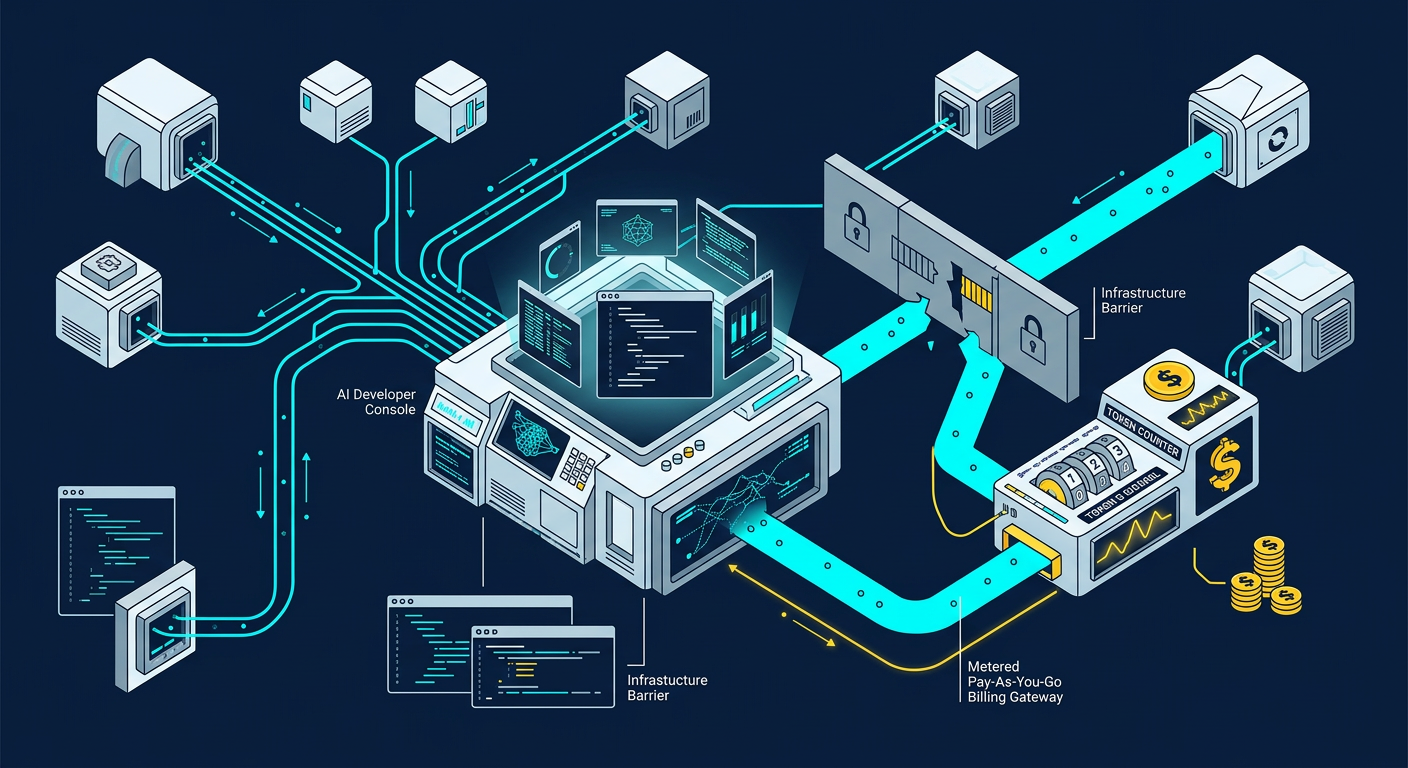



Anthropic is tightening the economics around Claude Code. According to a customer email shared on Hacker News, the company has stopped letting subscribers use their Claude subscription limits for OpenClaw and other third-party harnesses, pushing those workflows onto separate pay-as-you-go billing instead.
The policy took effect at noon Pacific on April 4, 2026, which means the change landed on Friday, April 4 in the United States and Saturday, April 5 in Cairo time. For developers who had been treating Claude Code subscriptions as an all-in-one budget for external tooling, that is a meaningful pricing reset rather than a minor billing clarification.
What Anthropic Changed
Anthropic’s message said subscribers will “no longer be able to use your Claude subscription limits for third-party harnesses including OpenClaw” and that the same policy will roll out across other third-party tools shortly. The immediate result is straightforward: if a developer is using Claude Code through an outside orchestration layer, the subscription no longer covers that usage.
That matters because OpenClaw has become part of a broader shift toward autonomous or semi-autonomous software workflows. Instead of using Claude Code directly inside Anthropic’s own interface, teams increasingly wrap it in external harnesses that manage longer task chains, agent coordination, and repeated model calls. Those patterns can generate far heavier usage than a normal human-in-the-loop coding session.
Anthropic’s Explanation
Claude Code lead Boris Cherny said on X that Anthropic’s subscription model was not built for the usage patterns of these third-party tools. In a separate post, he described the move as part of trying to manage growth sustainably and argued that the issue is more about engineering constraints than hostility to open source.
Cherny also pushed back on the idea that Anthropic is targeting OpenClaw specifically. While the company began with that tool, he said the rule applies to all third-party harnesses and noted that he had recently submitted pull requests to improve prompt cache efficiency for OpenClaw. Anthropic is also offering refunds for subscribers who did not realize that this style of usage was outside the company’s intended support model.
Why the Backlash Is Sharp
The timing made the announcement feel more political than operational. OpenClaw creator Peter Steinberger recently said he is joining OpenAI, while the project itself continues as open source with support from Anthropic’s chief rival. Steinberger wrote that he and OpenClaw board member Dave Morin had tried to persuade Anthropic to delay the move, but only managed to buy users an extra week.
That sequence has made some developers read the change as competitive lock-in rather than simple capacity management, especially because Claude Code has become one of the most visible products in Anthropic’s push for developer mindshare. Whether that interpretation is fair or not, it lands at a moment when pricing, limits, and product access are already under heavier scrutiny across the AI tooling market.
The backdrop is broader than Anthropic alone. OpenAI, for example, recently shut down its Sora app and video generation models, a move we covered here, as major AI vendors keep reallocating compute and product focus toward higher-priority categories like software engineering and enterprise workflows.
For developers, the practical takeaway is simple: Claude Code subscriptions now cover less than some power users assumed. If third-party harnesses become a standard way to run coding agents at scale, vendors will increasingly have to decide whether those workflows belong inside flat subscriptions or on metered infrastructure pricing. Anthropic has now made its answer clear.
Comments
No comments yet. Be the first to share your thoughts.
Sign in or create an account to leave a comment.