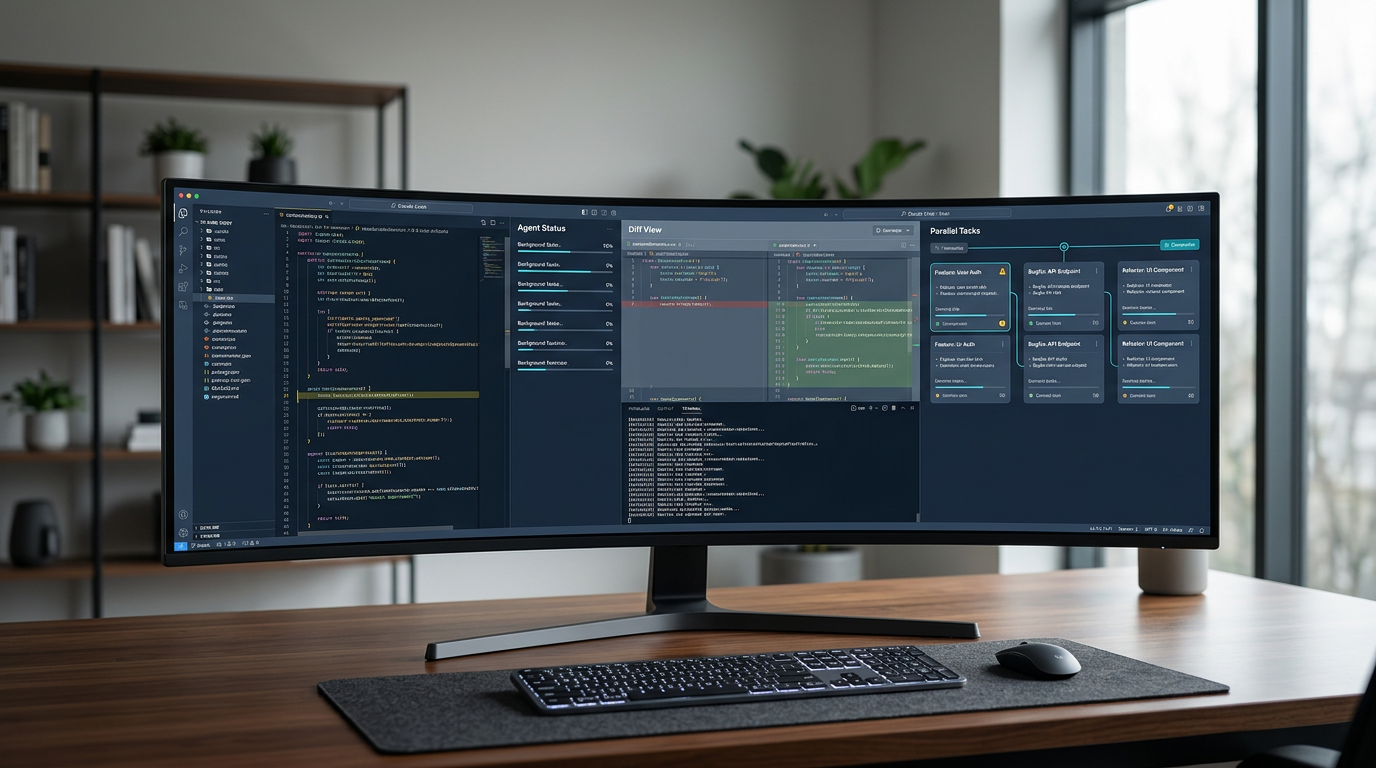



Anthropic is redesigning Claude Code desktop around a new assumption: modern AI coding work rarely happens in a single thread. The company says the updated app is built for developers who are juggling refactors, bug fixes, and test-writing across multiple repos at once, with a new interface designed to keep those parallel agent sessions manageable.
That framing matters because it says something bigger about where coding assistants are going. Anthropic is no longer optimizing Claude Code only for a back-and-forth prompt workflow. It is optimizing for orchestration, where the developer is supervising several strands of work in flight and stepping in only where needed.
A Desktop App Built for Multi-Session Work
The headline feature is a redesigned sidebar that puts active and recent sessions in one place. Anthropic says users can filter by status, project, or environment, group work by project, and let sessions archive themselves once related pull requests are merged or closed. The goal is straightforward: reduce the coordination burden that shows up when a coding assistant becomes part of a multi-task workflow instead of a single-task tool.
Anthropic is also adding side chats, which branch from a main session without feeding their contents back into the primary thread. That design choice is more important than it sounds. It suggests the company is trying to solve a common failure mode in agentic tools, where clarifying a side question can pollute the context of the main task and send the agent off course.
More of the Workflow Stays Inside Claude Code
The redesign also pulls more common developer tools into the app itself. Anthropic says the desktop experience now includes an integrated terminal, an in-app file editor, a faster diff viewer for larger changesets, and a broader preview pane that can handle HTML, PDFs, and local app previews.
That shift is less about feature parity with an IDE than about reducing context switching. If developers can review Claude’s work, make spot fixes, run tests, and inspect previews without jumping between multiple windows, the assistant becomes easier to use as part of a live engineering workflow. The drag-and-drop workspace layout pushes the same idea further by letting users organize panes around how they actually monitor agent output.
Anthropic Is Chasing a More Operational Version of Agentic Coding
The deeper signal here is strategic. Anthropic is explicitly describing agentic coding as a process with many things happening at once, and positioning Claude Code desktop as the control surface for that reality. The product direction lines up with a broader shift we have already seen in AI coding tools, where value increasingly comes from coordination, visibility, and session management rather than just raw code generation.
Anthropic also says the redesigned app now has parity with CLI plugins, supports local or cloud sessions, and extends SSH support to Mac as well as Linux. Those additions matter because they help the desktop app fit more naturally into the kinds of mixed local-and-remote workflows real engineering teams already run.
The immediate takeaway is that Anthropic is treating Claude Code less like a chat interface wrapped around coding tools and more like an operations layer for parallel software work. If that model holds, desktop agent products will increasingly be judged not just by how well they write code, but by how well they help developers supervise multiple streams of AI work without losing control of the system.
Comments
No comments yet. Be the first to share your thoughts.
Sign in or create an account to leave a comment.