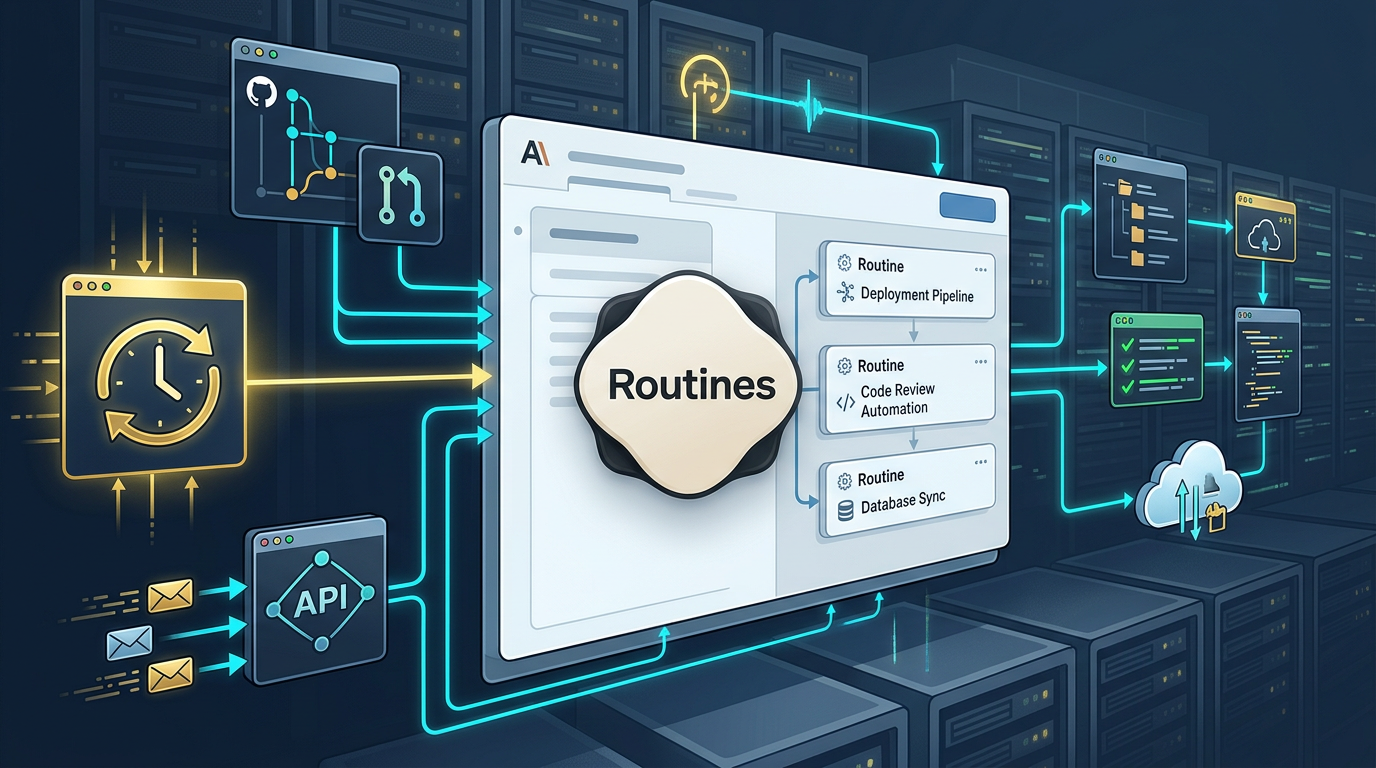



Anthropic is pushing Claude Code further away from the one-session-at-a-time assistant model and deeper into persistent software operations. With the launch of Routines in research preview, teams can now configure recurring Claude Code automations once, connect them to a repo and external services, and have them run on a schedule, from an API call, or in response to GitHub events.
That matters because it turns Claude Code from an interactive coding tool into something closer to lightweight engineering infrastructure. Instead of relying on developers to keep their laptops open, manage cron jobs, or glue together external automation stacks, Anthropic is making those repeatable workflows a built-in product surface that runs on its own web infrastructure.
What Anthropic Is Actually Shipping
According to Anthropic’s official Routines documentation and the company’s launch post on X, a routine packages a prompt, a repository, and relevant connectors into a reusable automation. Teams can then trigger that routine in three main ways: on a schedule, via API, or from GitHub repository events.
The scheduled mode is the most straightforward expression of the idea. Anthropic is pitching it for recurring work like bug triage, docs drift checks, or nightly maintenance tasks. API-triggered routines widen the scope significantly by giving every routine its own endpoint and auth token, making it possible to wire Claude Code into deploy hooks, monitoring systems, and internal tooling. GitHub-triggered routines push the feature even closer to the core software development loop, allowing Claude to react automatically to pull requests and continue following the same session as comments and CI failures arrive.
 Source: Anthropic
Why This Is More Than a Scheduling Feature
The deeper story is not that Anthropic added cron-style automation. It is that the company is trying to make agentic software work feel operationally normal. Claude Code users were already building these kinds of automations themselves, but doing so meant handling surrounding infrastructure manually. Routines moves that packaging, scheduling, and triggering model inside the product.
That shift is what makes the launch strategically important. A routine can pull from project management tools, monitor repos, respond to alerts, and open or update work in context. In practice, that means Claude Code is being positioned less as a tool you consult and more as a system you assign recurring responsibility to. The examples Anthropic highlights, from backlog management to bespoke PR review and deploy verification, all point in that direction.
Anthropic says routines run on Claude Code on the web, which is a practical detail with big workflow consequences. If the automation no longer depends on a local machine, it becomes easier to treat it as durable team infrastructure rather than a personal productivity hack.
The Catch: This Still Looks Like a Managed Preview
The launch is available in research preview rather than as a mature enterprise automation product, and Anthropic is being explicit about usage boundaries. Routines are available to Claude Code users on Pro, Max, Team, and Enterprise plans with the web product enabled, and they count against normal subscription usage while also carrying daily routine caps before extra usage kicks in.
That framing suggests Anthropic is still testing both demand and operational load. It also shows where the company sees the product going. If teams adopt routines for triage, code review, alert handling, and issue resolution, the real competition will not just be other coding assistants. It will be the broader landscape of workflow automation, CI extensions, and engineering operations tooling.
The immediate takeaway is simple: Anthropic wants Claude Code to sit inside recurring engineering loops, not just answer one-off prompts. If that model sticks, Routines could become one of the clearest examples yet of how coding assistants evolve into agentic systems with standing responsibilities.
Now in research preview: routines in Claude Code.
— Claude (@claudeai) April 14, 2026
Configure a routine once (a prompt, a repo, and your connectors), and it can run on a schedule, from an API call, or in response to an event.
Routines run on our web infrastructure, so you don’t have to keep your laptop open. pic.twitter.com/m2XJWYqkf8
Comments
No comments yet. Be the first to share your thoughts.
Sign in or create an account to leave a comment.