


Definition
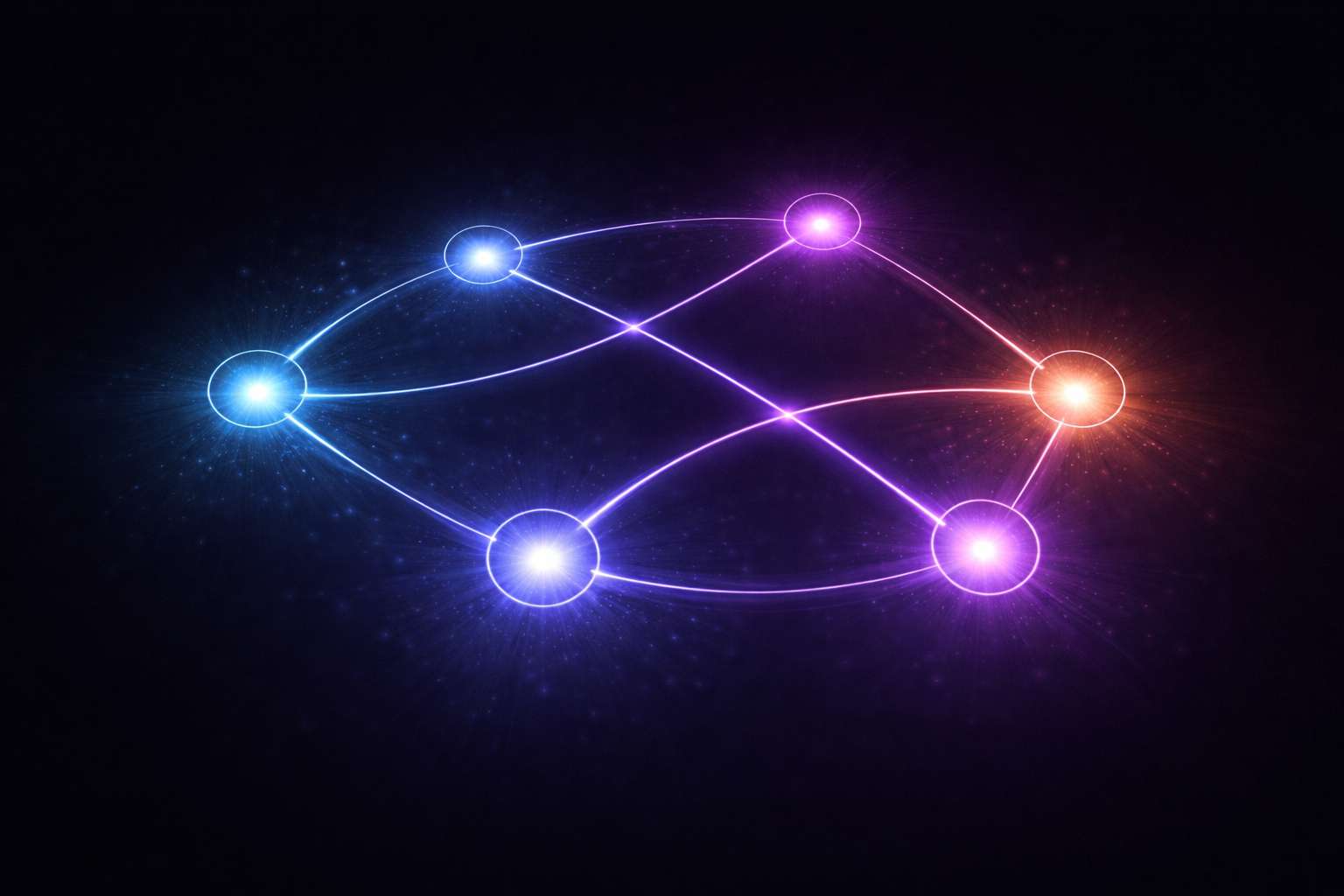
In the world of artificial intelligence, a “Multi-Agent System” (MAS) is the shift from a “lone genius” to a “team of specialists.” A single AI Agent is a powerful tool that can use a Large Language Model as its brain to browse the web and run code. However, as tasks become more complex—like writing a hundred-page software application or managing a global marketing campaign—a single agent can become “overwhelmed,” making more Hallucinations and errors. A multi-agent system solves this by breaking the project into roles. One agent acts as a researcher, another as a writer, and a third as an editor. They “talk” to each other through a shared message board, critiquing each other’s work and iterating until the job is done to a high standard.
Why It Matters
The significance of multi-agent systems is that they bring the concept of “Collaboration” to AI. In a human office, we don’t expect one person to be the expert in legal, accounting, and creative design. We hire specialists and have them review each other’s work. By applying this same logic to AI, we can build systems that are significantly more “robust” and “accurate.”
For businesses, MAS is the foundation for Autonomous Workflows. Instead of a human managing ten different AI windows to get a job done, they can simply give a single “Manager Agent” a goal. The manager then “hires” and coordinates sub-agents to handle the details. This shift allows for a massive “Scaling” of productivity, as a single human can oversee an entire “AI Company” that works 24/7 without getting tired. As these systems become easier to build with frameworks like AutoGen and CrewAI, they are set to become the standard way that enterprise software is designed and deployed.
How It Works
A multi-agent system works through a sophisticated architecture of roles and communication protocols.
- Role Definition: Each agent is given a specific “System Prompt” that defines its expertise and boundaries. For example, a “Security Agent” might be told to “Only look for vulnerabilities in the code, do not suggest new features.”
- Orchestration: A “Manager Agent” or a “Router” decides which agent should handle which part of the task. It looks at the goal and breaks it into a sequence: researcher → coder → tester.
- Communication Protocol: The agents are connected through a shared environment. When the “Researcher Agent” finds some data, it posts it to the shared space. The “Coder Agent” then “reads” that data and writes the program.
- Self-Correction and Consensus: One of the most powerful features of MAS is “Criticism.” A “Reviewer Agent” can look at the output of a “Generator Agent” and say, “This code has a bug on line 45, try again.” This iterative loop continues until a certain quality threshold is met.
This “teamwork” allows the system to overcome the Context Window limits of a single AI, as each agent only needs to “remember” its specific part of the project.
Applications
Multi-agent systems are already revolutionizing Software Engineering. Tools like Devin or OpenDevin use a MAS approach, where one agent researches the documentation, another writes the code, and a third runs a test suite to ensure everything works as expected. This “closed loop” is what allows these tools to solve real-world GitHub issues with relatively little human supervision.
In Digital Marketing and Sales, MAS is used for “End-to-End Campaigns.” An “Audience Agent” researches a new market, a “Creative Agent” writes the ad copy, and an “Analytics Agent” monitors the data and “tells” the creative agent to adjust its tone for better performance.
For Scientific and Legal Research, MAS can analyze massive amounts of data in parallel. A “Paralegal Agent” can scan 500 pages of discovery documents, a “Case Law Agent” can research relevant precedents, and a “Strategy Agent” can then combine those findings into a single, cohesive legal argument. Finally, in Robotics and Manufacturing, MAS is used to coordinate swarms of drones or factory robots that must work together to move heavy objects or scan large areas without colliding.
Limitations
The biggest challenge with multi-agent systems is “Complexity and Cost.” Since every “thought” involves multiple calls to an expensive AI model across multiple agents, a MAS workflow can be 10-100 times more expensive and slower than a single chatbot response. There is also the risk of “Agent Divergence,” where the agents start “talking in circles” and never actually finish the task, wasting thousands of dollars in tokens on a fruitless debate.
There is also the “Security” issue. If one agent has permission to “run code” and another to “send emails,” a malicious user could potentially “trick” the system into a dangerous state (a Jailbreak) by manipulating the communication between agents. This makes Guardrails and “Human-in-the-Loop” supervision essential for any production-ready system.
Finally, managing a MAS requires a new type of “AI Orchestration.” Developers have to be very careful to avoid “Information Siloing,” where one agent has critical data that it “forgets” to share with the rest of the team. Building a balanced, communicative, and efficient AI team is a new and difficult engineering challenge that is still in its early stages.
Related Terms
- AI Agent: The foundational unit of an MAS—an autonomous system that can use tools and reason with an LLM.
- Tool Use: The specific capability that allows each agent in a MAS to “do things” in the real world.
- Large Language Model (LLM): The conversational “brain” that all agents in the system share.
- Reasoning Model: An advanced type of AI often used for the “Manager” or “Reviewer” roles in a MAS.
- Chain-of-Thought: The self-reasoning technique used by individual agents within the system.
- Grounding: The process of ensuring that every agent’s work is based on verifiable facts and data.
Further Reading
- AutoGen: Enabling Next-Generation LLM Applications — Microsoft’s framework for building and orchestrating multi-agent systems.
- CrewAI: Orchestrating Role-Playing AI Agents — A popular framework that focuses on role-based collaboration between AI agents.
- Multi-Agent Systems (Wikipedia) — A deep, academic overview of the history and theory of multi-agent systems in computer science.
- The Rise of Multi-Agent Systems in Software Engineering — A technical look at how MAS is becoming the standard architecture for autonomous coding tools.