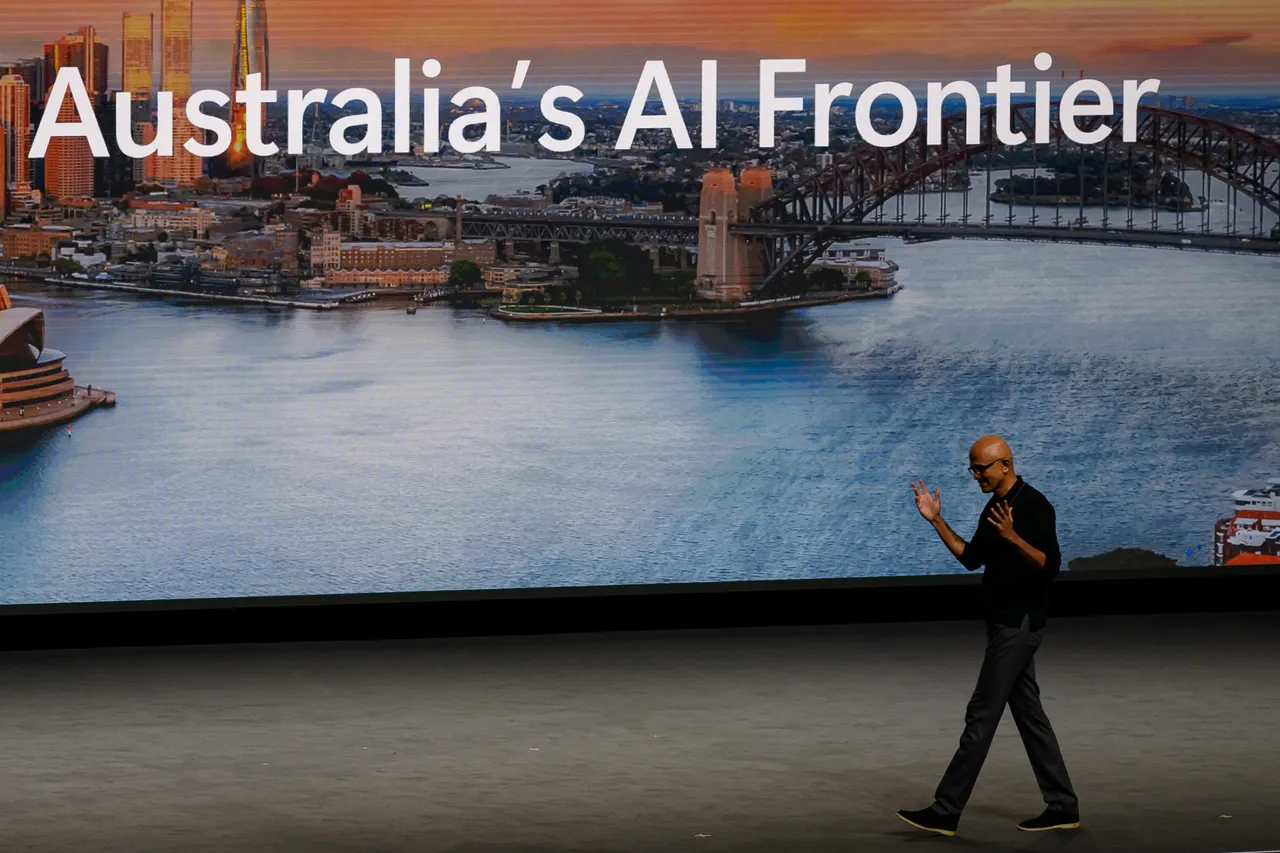



Microsoft is making its largest-ever investment in Australia, committing $18 billion through the end of 2029 to expand AI infrastructure, cybersecurity cooperation, safety evaluation, and workforce training. The announcement, made by Microsoft CEO Satya Nadella and Australian Prime Minister Anthony Albanese, adds another major deal to the global race for AI compute.
The size of the investment is the headline, but the structure is the more interesting part. Microsoft is not only buying more data center capacity. It is aligning cloud expansion with government expectations around AI data centers, national cyber defense, AI safety testing, and skills development.
Australia Is Becoming a Strategic AI Compute Market
The investment builds on Microsoft’s earlier $3.4 billion Australia commitment in 2023 and extends the company’s plans through 2029. Microsoft says the money will support expanded Azure cloud infrastructure, greater AI compute capacity, and advanced AI processors across the country.
That places Australia inside the same strategic map as other recent Microsoft infrastructure commitments across Asia, including Singapore, Thailand, and Japan. For cloud providers, AI infrastructure is no longer just a capacity question. It is a geopolitical and regulatory question: where can compute be built, powered, secured, and governed in ways that governments and enterprise customers will trust?
Microsoft is already building data centers near Canberra, as well as in New South Wales and Victoria. The new agreement is tied to Australia’s recently published expectations for AI data centers, which means the expansion is being framed around national capability rather than simple cloud growth.
Cybersecurity and AI Safety Are Built Into the Deal
The investment includes an extension of the Microsoft-Australian Signals Directorate Cyber Shield partnership established in 2023. More federal agencies are expected to join the program, while Microsoft will strengthen existing protections and work more closely with Home Affairs to secure critical government systems.
That cybersecurity layer is not a side project. As governments put more sensitive services, defense-adjacent systems, and public infrastructure into AI-enabled cloud environments, the security model becomes part of the AI strategy itself. Compute without cyber resilience is not national capability; it is a larger attack surface.
Microsoft has also agreed to collaborate with the recently established Australian AI Safety Institute, which is focused on testing and evaluating AI systems to reduce harm in human interactions with AI. That gives the investment a safety and governance dimension at a moment when countries are trying to build domestic AI capacity without letting deployment outrun oversight.
The Skills Promise Is Part of the Infrastructure Story
Microsoft says it wants about three million Australians to have workforce-ready AI skills by the end of 2028. The company also plans to introduce its Elevate for Educators AI program, tying the investment to training rather than treating the data center buildout as a purely technical project.
That matters because AI infrastructure investments often promise economic upside without answering a harder question: who actually benefits from the new capacity? Albanese framed the deal around making sure Australians benefit from AI while being protected from its risks. In policy terms, that means compute, security, safety, and skills are being packaged as one national AI agenda.
Australia has also struck major AI infrastructure agreements with other technology companies. The source material points to AWS’s $13 billion commitment and OpenAI’s $5 billion agreement over the past year. Microsoft is entering that field with a larger number and a broader policy wrapper.
Big Tech’s AI Infrastructure Race Keeps Expanding
For Microsoft, the Australia commitment continues a month of heavy spending across the region. The company is building the physical and political foundation for AI services that will require more local capacity, lower latency, and clearer jurisdictional trust.
For Australia, the deal is a bet that national AI competitiveness depends on more than model access. It requires data centers, chips, cybersecurity partnerships, safety evaluation institutions, and a workforce that can actually use the tools being deployed. The government’s new data centre expectations show how infrastructure policy is becoming AI policy by another name.
The open question is how much of the promised value stays local. Big Tech infrastructure investments can strengthen national capability, but they also deepen dependence on a handful of cloud providers. Australia’s challenge will be turning Microsoft’s $18 billion commitment into durable domestic capacity rather than simply more outsourced compute.
Comments
No comments yet. Be the first to share your thoughts.
Sign in or create an account to leave a comment.