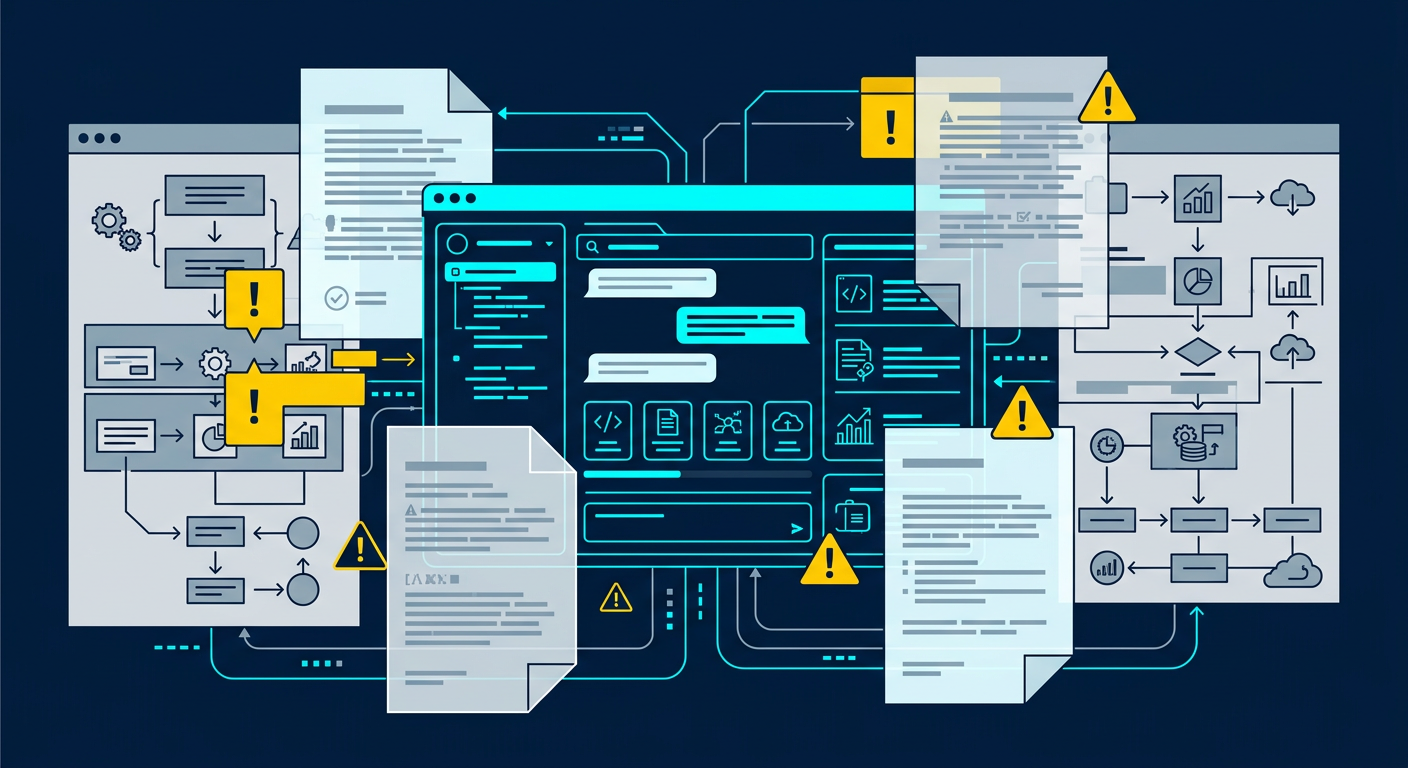



Microsoft is trying to make Copilot feel like essential software for work, but its own terms of use briefly pulled the rug out from under that message. Users resurfaced language in the company’s Copilot terms warning that the product is “for entertainment purposes only” and should not be relied on for important advice, a line that looks increasingly awkward for a tool being sold into everyday business workflows.
The issue is not that AI systems can make mistakes. Every serious AI vendor says that in one form or another. The problem for Microsoft is the mismatch between the language in its legal text and the way it is currently positioning Copilot in the market, especially as Bloomberg recently reported on the company’s aggressive push to turn Copilot into a much larger business.
The Disclaimer That Took Off
The resurfaced wording, highlighted by PCMag and Tom’s Hardware, warned users not to treat Copilot as a source of important advice and said the system may make mistakes or fail to work as intended. On its own, that kind of caution is standard legal shielding. In public, though, the phrase “for entertainment purposes only” landed as a surprisingly blunt admission from a company asking enterprises to integrate the product into real workflows.
That tension explains why the screenshot spread quickly. AI critics saw it as evidence that even Microsoft does not trust its own assistant. More charitable readings still landed on the same conclusion: the company had left old language in place long after the product strategy had moved on.
Microsoft’s Response
Microsoft told PCMag that the clause is legacy language that no longer reflects how Copilot is used today, and said it will be updated in the next revision. That response suggests the company sees the problem as one of stale documentation rather than a deeper policy retreat.
Still, even “legacy language” matters when it sits inside the terms governing a live product. Companies often use legal disclaimers to preserve maximum flexibility while product teams market confidence and utility. When those two layers drift too far apart, users notice, especially in AI, where the gap between promotional messaging and real-world reliability remains unusually sensitive.
The Industry Is Saying Similar Things
Microsoft is not alone in warning users to stay skeptical. As Tom’s Hardware noted, both OpenAI’s terms and xAI’s terms contain their own versions of the same caution: model outputs should not be treated as guaranteed truth.
That consistency tells us something important about the current state of AI products. Even as vendors market them as workplace copilots, research assistants, and decision-support systems, the legal baseline remains defensive. The tools are useful, but the companies behind them are still not willing to stand behind their outputs as dependable enough for uncritical use.
For Microsoft, that does not make the controversy fatal, but it does make it revealing. If Copilot is meant to be infrastructure for knowledge work, the legal language surrounding it has to catch up to the ambition. Otherwise, every “legacy” disclaimer becomes a credibility problem waiting to be screenshotted.
Comments
No comments yet. Be the first to share your thoughts.
Sign in or create an account to leave a comment.