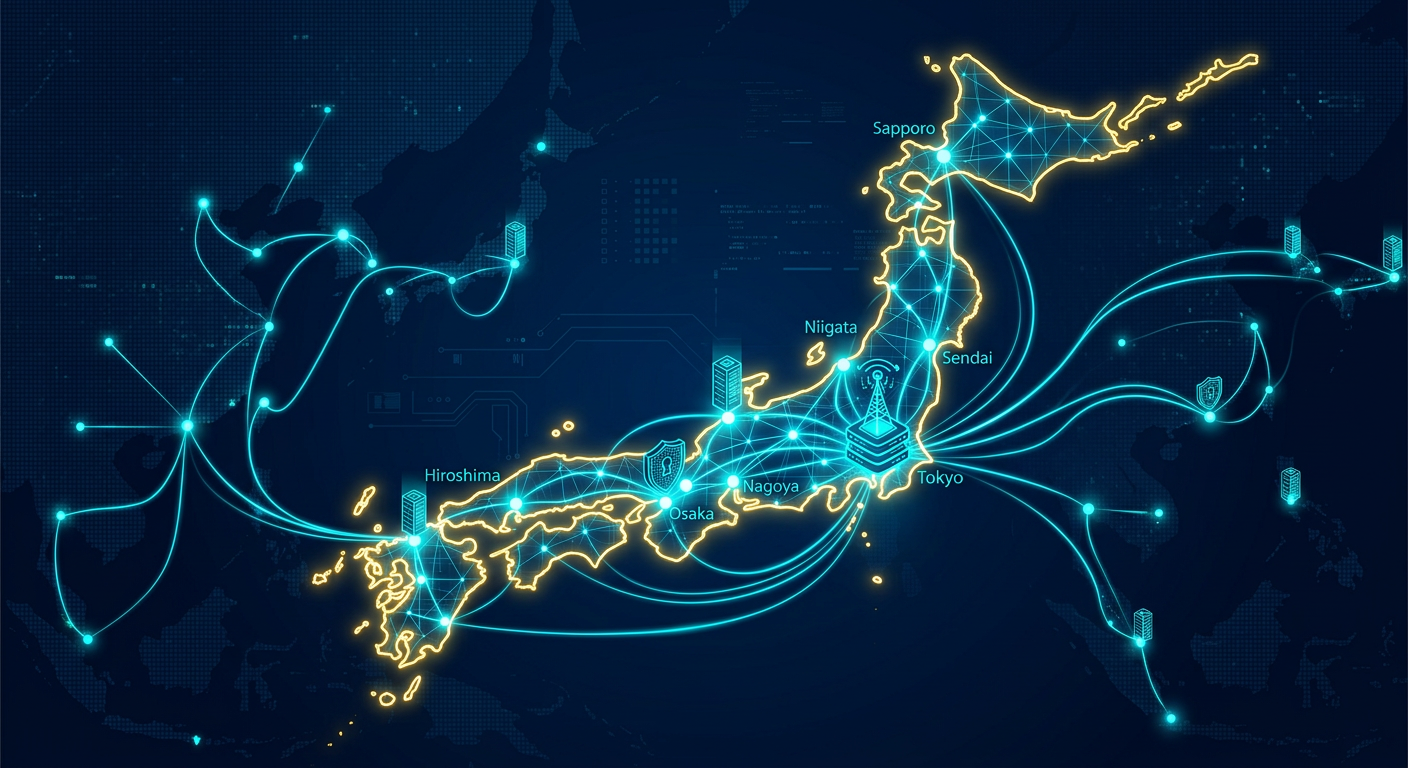



Microsoft has announced a $10 billion investment in Japan, covering AI and cloud infrastructure, national cybersecurity capacity, and a commitment to train one million AI engineers and developers in the country by 2030. The announcement came following a Friday meeting in Tokyo between Microsoft president and vice chairman Brad Smith and Japanese Prime Minister Sanae Takaichi, and was confirmed in a statement on the Microsoft website.
The package is separate from the company’s previous $2.9 billion commitment to Japan made in April 2024, and will be deployed over the next four years.
Infrastructure Built on Japanese Terms
At the center of the investment is a partnership with Japanese companies Sakura Internet and SoftBank to expand cloud and AI infrastructure through Microsoft’s Azure platform, with GPU-based compute supplied by the Japanese partners. The arrangement includes a commitment that data processing will remain within Japan — a condition that Microsoft framed as essential for supporting the development of Japan’s own large language models.
Markets responded immediately to the news. Sakura Internet’s stock climbed sharply in the hours following the announcement, reflecting investor confidence in the company’s newly elevated position within Japan’s AI supply chain.
Cybersecurity and the National Police Agency
Alongside the infrastructure commitments, Microsoft announced an expansion of its existing collaboration with Japan’s National Police Agency, directed at strengthening the country’s national cybersecurity posture. The move connects the commercial investment to Japan’s broader concerns around critical infrastructure protection — a priority that has grown significantly as AI systems become embedded in government and enterprise operations.
A Million AI Engineers by 2030
The workforce dimension of the package involves partnerships with Fujitsu, Hitachi, NEC, NTT Data, and SoftBank to develop AI talent across the country. The 2030 target of one million trained engineers and developers reflects the scale of the challenge Japan faces: the country is projected to confront a shortfall of 3.2 million AI and robotics workers by 2040.
Microsoft’s previous Japan investment has already enabled more than 3.4 million people to build AI skills, the company said, positioning this new commitment as an acceleration rather than a new start.
Smith characterized the investment as a long-term structural commitment. “We are bringing the world’s best technology, building secure and reliable infrastructure on Japan’s terms, and helping equip its workforce to accelerate productivity and innovation across its economy,” he said in the statement.
Prime Minister Takaichi offered an equally direct endorsement: “We welcome the plan because it will raise Japan’s growth potential, deal with the issue of data sovereignty and boost human resources.”
One Week, Three Countries
The Tokyo announcement was the most significant stop in a week of back-to-back investment disclosures across Asia. Smith had traveled to Bangkok earlier in the week, where he met with Prime Minister Anutin Charnvirakul and revealed a $1 billion commitment to Thailand’s AI and cloud infrastructure buildout. From there he moved to Singapore, where Microsoft confirmed a $5.5 billion investment to expand AI capabilities in the city-state.
Taken together, the three announcements represent more than $16.5 billion in regional AI infrastructure commitments from a single company in a single week — a scale of investment that signals how aggressively major technology players are moving to establish infrastructure dominance in Asia ahead of the next wave of enterprise AI adoption.
For Japan specifically, the combination of sovereign data processing, cybersecurity partnership with national law enforcement, and workforce development at scale makes this more than a commercial infrastructure deal. It is a template for how large technology companies are negotiating their position in markets where AI adoption is accelerating but where governments are equally focused on maintaining control over the systems that underpin it.
Comments
No comments yet. Be the first to share your thoughts.
Sign in or create an account to leave a comment.