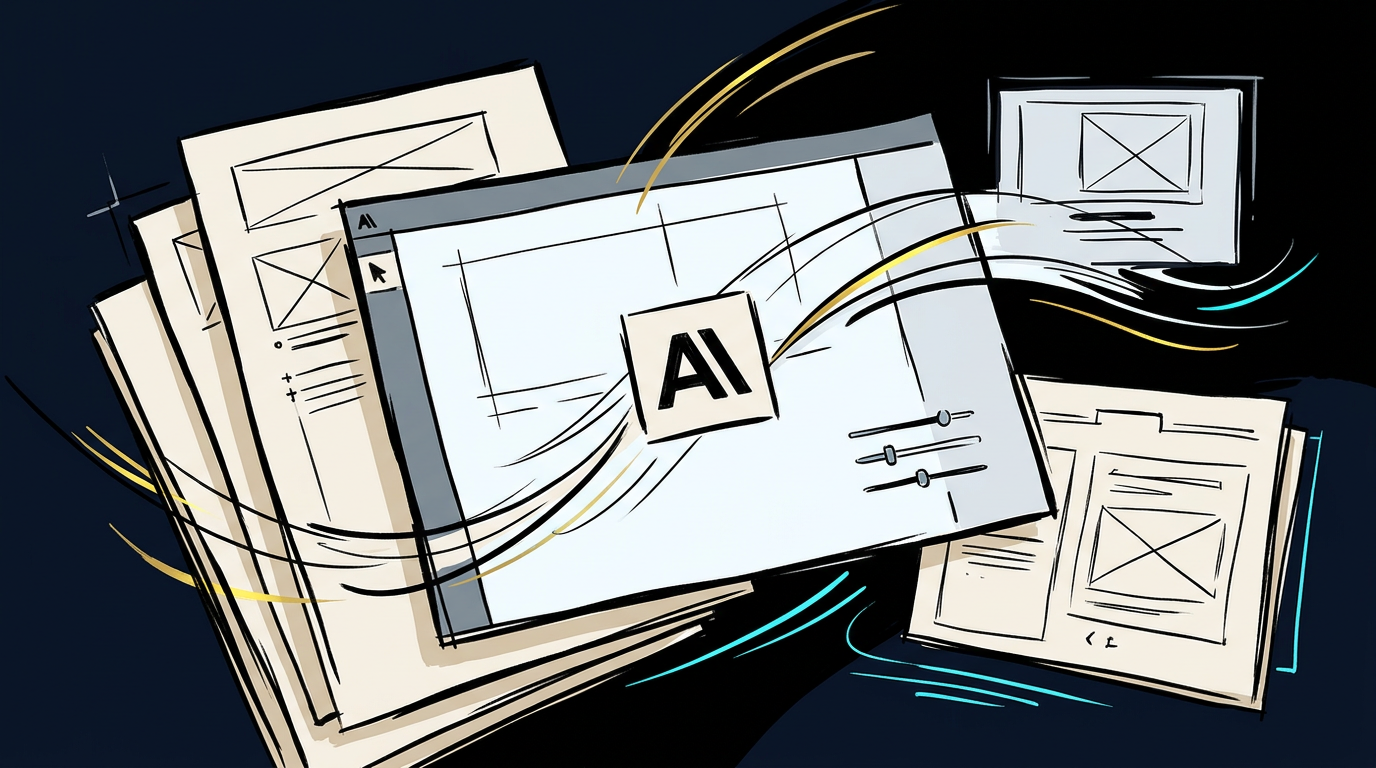



Anthropic is expanding Claude beyond writing and coding into visual production. With the launch of Claude Design in research preview through Anthropic Labs, the company is pitching Claude as a workspace for prototypes, decks, one-pagers, and marketing assets rather than just a chatbot that hands back text.
That shift matters because it pushes Anthropic deeper into the productivity stack. Instead of helping users describe a design brief for another tool, Claude Design is meant to generate the deliverable itself, refine it conversationally, and eventually hand it off for implementation or export.
Anthropic Wants Claude to Be a Visual Coworker
According to Anthropic’s launch post, Claude Design is powered by Claude Opus 4.7 and is available in research preview for Pro, Max, Team, and Enterprise subscribers. Anthropic says users can start from a prompt, uploaded files, screenshots, or a codebase, then iterate through conversation, inline comments, direct edits, and custom sliders generated by Claude itself.
That product framing is more ambitious than a simple slide maker. Anthropic is trying to make Claude useful at the messy midpoint between idea and polished artifact, where teams usually bounce between designers, product managers, founders, and marketers. The company’s examples span interactive prototypes, product mockups, pitch decks, and campaign visuals, all with the same pitch: describe the goal once, then keep refining without switching tools every few minutes.
Anthropic is also leaning heavily on brand consistency. It says Claude Design can read a company’s design files and codebase during onboarding to build a reusable design system, then apply those colors, type choices, and components across future projects automatically. That could make the tool much more relevant to teams that care less about one-off inspiration and more about fast, on-brand execution.
If you want the model layer behind that experience, Anthropic’s earlier Claude Opus 4.7 coverage gives more context on the coding, vision, and safety upgrades now feeding into Claude Design.
 Source: Anthropic
The Real Play Is AI-Native Creative Workflow
The bigger story is not that Claude can now make slides. It is that Anthropic is testing whether conversational AI can become the operating layer for creative work that normally lives across Figma, Canva, presentation software, internal docs, and front-end prototypes.
Claude Design appears built around that idea. Anthropic says teams can import DOCX, PPTX, and XLSX files, capture visuals directly from a live website, collaborate inside shared documents, export to PDF, PPTX, Canva, or standalone HTML, and then send a finished design bundle to Claude Code for implementation. In other words, Anthropic is trying to connect ideation, iteration, review, and handoff inside one product loop.
That makes Claude Design a notable addition to Anthropic’s broader agentic AI strategy. The company has already been pushing Claude deeper into coding, long-running tasks, and enterprise workflows. A design surface extends that same logic into one of the highest-friction parts of product and marketing work: turning rough intent into something concrete enough for others to react to.
Research Preview Means Anthropic Is Still Testing the Boundaries
Claude Design is not rolling out as a finished mass-market product. Anthropic says access is being staged gradually throughout the day and, for Enterprise customers, the feature is off by default until admins enable it. The company’s admin guide also makes clear that governance and organization-level controls are part of the launch story, not an afterthought.
That caution is consistent with the Anthropic Labs framing. Labs products are where the company can put more experimental workflows in front of real users, see where they hold up, and learn which use cases deserve a broader push. Claude Design looks like exactly that kind of test: a bet that Claude’s strongest next role may be as an AI collaborator for visual work, not just a generator of words and code.
Anthropic’s short-term goal seems straightforward: make Claude useful earlier in the creative process and keep it useful all the way through handoff. If that works, Claude Design could become less of a novelty design generator and more of a serious AI productivity layer for teams that need to move from concept to polished artifact without adding another bottleneck.
Introducing Claude Design by Anthropic Labs: make prototypes, slides, and one-pagers by talking to Claude.
— Claude (@claudeai) April 17, 2026
Powered by Claude Opus 4.7, our most capable vision model. Available in research preview on the Pro, Max, Team, and Enterprise plans, rolling out throughout the day. pic.twitter.com/2BgBGtgYGX
Comments
No comments yet. Be the first to share your thoughts.
Sign in or create an account to leave a comment.