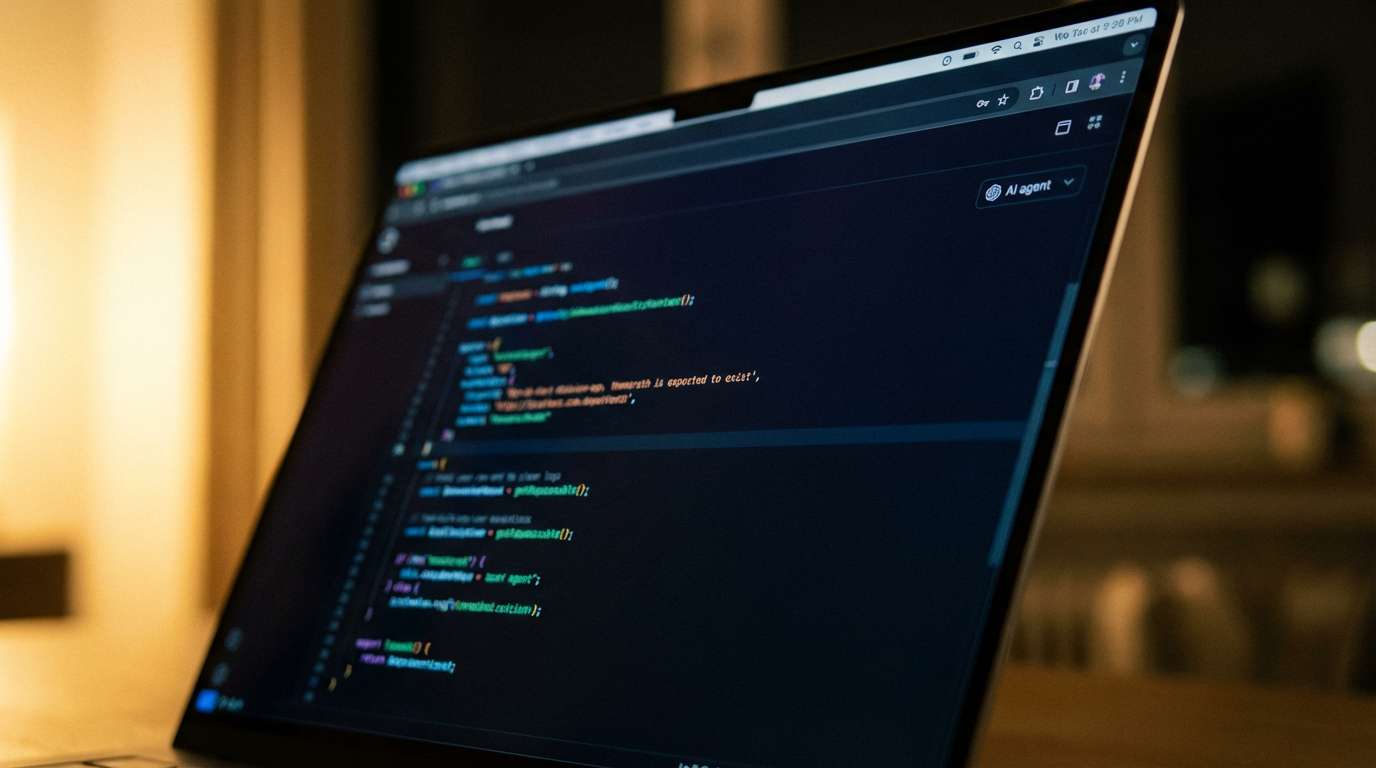
For developers leaning on AI to write and ship code, the current state of the art demands a constant trade-off: either watch every move the model makes, or step back and accept the unpredictability that comes with giving it free rein. Anthropic is now pushing to make that trade-off obsolete.
Auto Mode: The AI Decides What’s Safe
The company has introduced “auto mode” for Claude Code, currently available as a research preview — meaning it is open for developer testing but not yet a finalized product. The feature shifts the permission-granting decision away from the developer and onto the AI itself: Claude Code evaluates each action before executing it, proceeds automatically with anything it determines to be safe, and blocks anything it flags as risky.
The safety layer does two things simultaneously. It screens for behavior that falls outside the scope of what the user originally requested, and it checks for prompt injection — a class of attack where malicious instructions are embedded in content the AI is actively processing, causing it to take actions the user never intended.
Mechanically, auto mode is an evolution of Claude Code’s existing dangerously-skip-permissions command, which already allowed the AI to make all execution decisions independently. Auto mode layers a real-time AI-driven safety review on top of that same capability, making the unchecked version of the feature more viable for broader use.
A Growing Wave of Autonomous Dev Tools
The launch reflects an industrywide momentum toward agentic coding environments. Tools from GitHub Copilot Workspace and OpenAI Codex have already moved in the direction of executing multi-step tasks autonomously on a developer’s behalf. What Claude Code’s auto mode adds is a distinct architectural choice: rather than the user defining when to hand off control, the AI makes that determination dynamically, action by action.
Anthropic has not yet published the specific criteria its safety layer uses to distinguish acceptable actions from flagged ones — a gap that enterprise security teams and individual developers will likely probe before committing to the feature in serious workflows. The company has indicated that further details are forthcoming.
Part of a Broader Agentic Push
Auto mode arrives alongside two other recent Claude Code launches. Claude Code Review is an automated code reviewer designed to surface bugs before they reach the codebase. Dispatch for Cowork allows users to delegate tasks directly to AI agents, extending Claude’s reach into broader asynchronous workflows.
Together, the three features signal a deliberate direction for Anthropic’s developer tooling: moving Claude from a responsive coding assistant toward a system capable of sustained, semi-independent operation across a development environment.
Auto mode is rolling out to Enterprise and API users in the coming days. Anthropic currently limits it to Claude Sonnet 4.6 and Opus 4.6, and strongly recommends running it inside isolated, sandboxed environments — keeping it separated from production systems to contain any unintended consequences while the feature matures.
Comments
No comments yet. Be the first to share your thoughts.
Sign in or create an account to leave a comment.