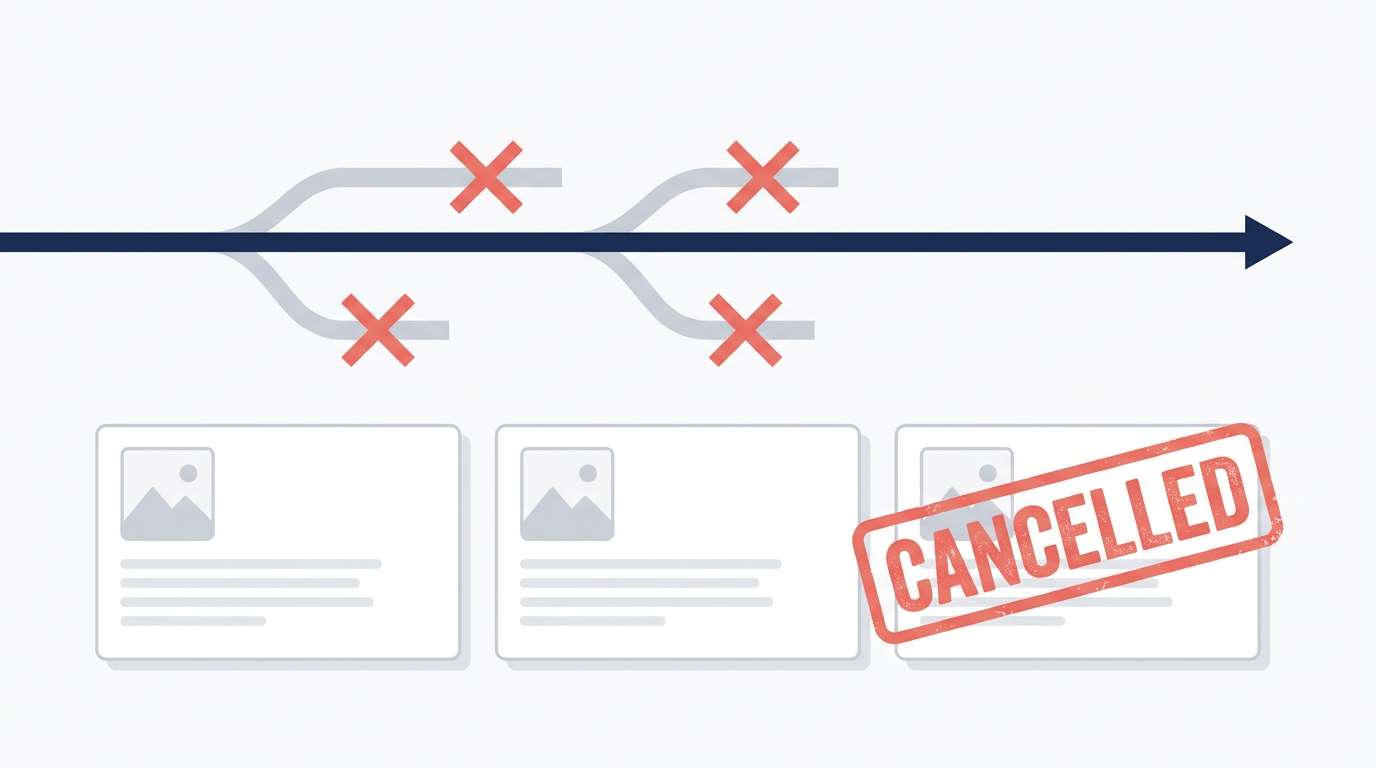
In the space of five days, OpenAI has quietly dismantled three of its most publicly discussed experimental directions. On Tuesday, Instant Checkout was deprioritized. On Wednesday, Sora was shut down. And on Thursday, the Financial Times reported that ChatGPT’s long-debated adult mode has been placed on indefinite hold. When TechCrunch reached out for comment, OpenAI said it had “nothing further to add.”
The cleanup is complete. The question now is what it reveals about where OpenAI is actually heading.
A Feature That Was Already on Life Support
The adult mode concept had been a hotly debated topic ever since OpenAI’s CEO floated the idea last October, suggesting that a forthcoming age-gated version of ChatGPT would “treat adult users like adults” and offer “erotica for verified adults.” The framing was deliberate — positioning the feature as a matter of user autonomy rather than content liberalization. It did not land that way internally.
The feature ran into serious internal resistance. An advisory council pushed back hard, raising concerns about emotional overreliance on AI, harmful content, and scenarios described internally as “sexy suicide coach” situations. Advisers also flagged worries about child safety and mental health safeguards. A meeting between executives and the advisory council in January reportedly became heated, with those concerns stated explicitly. Concerns about its release contributed to at least one senior staff member leaving the company, who told the Financial Times: “AI shouldn’t replace your friends or your family; you should have human connections.”
The feature was originally aimed at a December 2025 launch, then pushed to early 2026. It never made it out. After multiple delays, it appears ChatGPT’s adult mode got swept up in the broader refocusing push alongside Sora and Instant Checkout — though it could well be that concerned OpenAI executives were happy for the excuse to put the controversial feature in a drawer.
Not Just Internal Pressure
The resistance was not limited to employees and advisers. The Financial Times reported that the sexual chatbot “faced growing pushback over how it could encourage unhealthy attachments to AI systems and expose minors to problematic sexual content.” Investors also raised objections — a more commercially significant signal. xAI’s recent CSAM controversy involving Grok provided a live cautionary example of what can go wrong when safety guardrails on AI-generated sexual content are inadequate, and OpenAI was clearly watching.
The Bigger Picture: Three Cancellations, One Strategy
The pattern across this week is more significant than any individual cancellation. OpenAI has shelved plans to release the erotic chatbot alongside Sora as it redirects efforts toward its upcoming models and a consolidated superapp strategy. The company is now reportedly working on a ChatGPT superapp that combines its Codex coding agent with ChatGPT and its Atlas browser — a direct attempt to compete with Anthropic’s Claude and Google’s Gemini on enterprise and developer ground.
The strategic logic is increasingly clear. OpenAI is an enterprise and developer business competing for the same customers as Anthropic — which has been on an aggressive run of coding and business tool launches over recent months — and Google’s Gemini platform. Adult content, AI video generation, and in-chat retail checkout are all tangential to that fight. The company’s current priority appears to be the development of this superapp, and the cancellations this week look less like retreat and more like deliberate scope reduction ahead of that release.
The Pentagon dimension adds further context. Three weeks ago, OpenAI announced a $200 million agreement with the Department of Defense — a contract that would be considerably harder to defend publicly if the same company was simultaneously shipping an AI erotica product. Employees and investors both raised concerns about the effect of sexualized AI content on society, and for a company navigating a government contract, a pending IPO, and an intensifying regulatory environment in parallel, the calculus on adult mode was straightforward.
The future OpenAI is building toward — enterprise workflows, developer tooling, agentic task execution — has no room for the version of the company that was experimenting with Disney characters and erotic chatbots four months ago. This week was the public acknowledgment of that choice.
Comments
No comments yet. Be the first to share your thoughts.
Sign in or create an account to leave a comment.