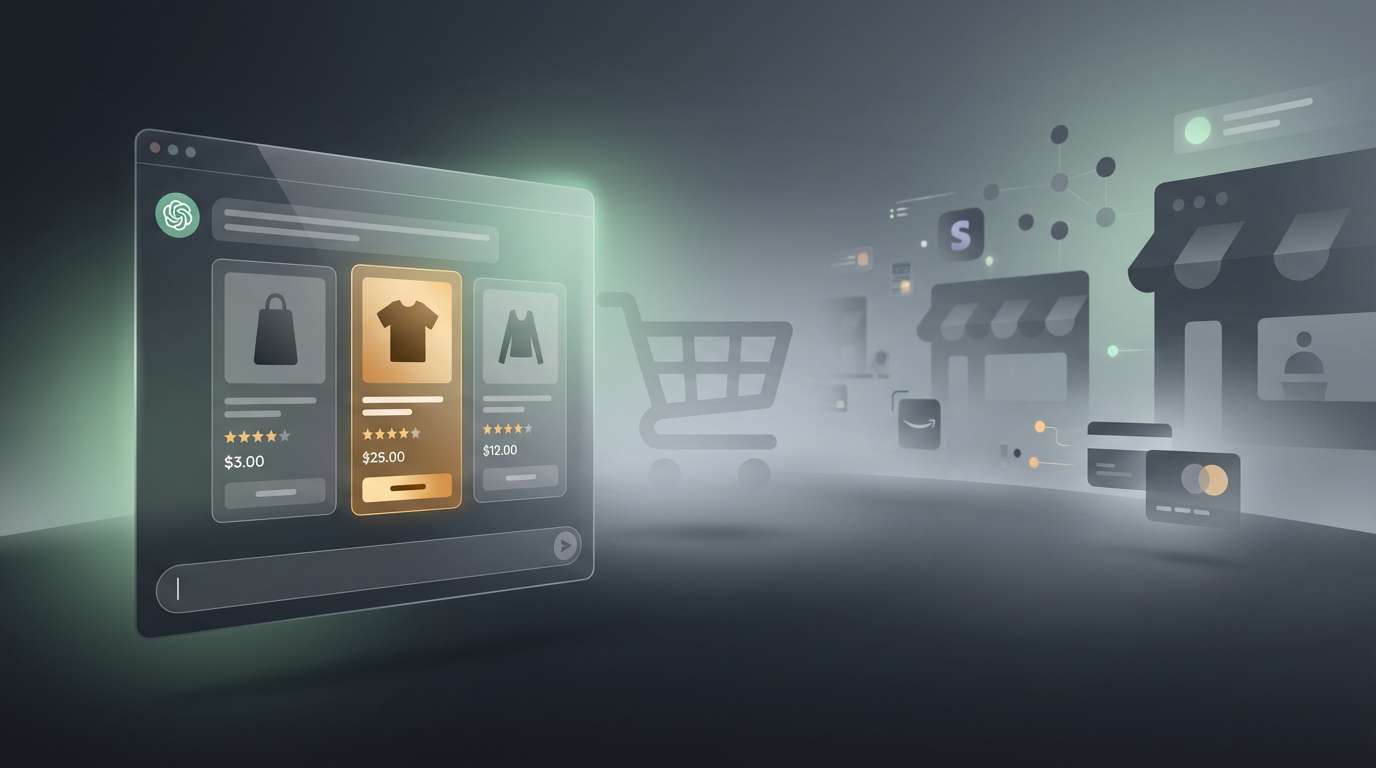
OpenAI’s bid to transform ChatGPT into a full-scale shopping destination is running into a wall — and the company is now changing course. In an announcement published Tuesday, OpenAI confirmed it is pulling back from a feature that allowed users to complete purchases directly inside the chatbot’s interface, citing a failure to deliver the flexibility the company had envisioned.
From Chatbot to Checkout Counter
The ambition was clear from the start. When OpenAI launched Instant Checkout in September 2025, it positioned ChatGPT as a next-generation shopping assistant — one capable of guiding users from product discovery all the way to purchase without ever leaving the conversation. The feature was built on the Agentic Commerce Protocol (ACP), an open standard co-developed with payments giant Stripe, and rolled out initially with US-based Etsy sellers. Shopify merchants, including brands like Glossier, SKIMS, and Vuori, were lined up to follow.
The mechanics were straightforward: a user would ask ChatGPT what they wanted to buy, and the chatbot would surface relevant products with a checkout flow embedded directly in the conversation — no tab-switching required.
Reality Check: Users Weren’t Buying
The feature did not gain the traction OpenAI had anticipated. In its Tuesday blog post, the company acknowledged the shortfall plainly: “We’ve found that the initial version of Instant Checkout did not offer the level of flexibility that we aspire to provide, so we’re allowing merchants to use their own checkout experiences while we focus our efforts on product discovery.”
The underlying problem was behavioral, not technical. According to reporting from The Keyword, OpenAI found that users were comfortable using ChatGPT to compare products, weigh options, and gather recommendations — but when it came to completing a purchase, most preferred to return to familiar retail environments where they already had saved payment methods and order histories. ChatGPT users, in short, were treating the chatbot as a research layer, not a cash register.
Technical and regulatory gaps compounded the challenge. As of February, OpenAI had not yet built out systems for collecting and remitting US state sales taxes — a clear signal that transactional volume never reached a scale that demanded it. Real-time inventory synchronization and fraud detection complexity added further friction.
A Narrower Role for ACP
OpenAI clarified that merchants can still optionally offer Instant Checkout through dedicated apps within ChatGPT, a model that major retailers like Target, DoorDash, and Instacart have already adopted for the holiday shopping season. The Agentic Commerce Protocol itself is not going away — OpenAI and Stripe will continue developing it — but its scope is now effectively narrower: a framework for a select pool of large retailers building their own ChatGPT integrations, rather than a universal checkout layer spanning millions of merchants.
Shopify’s president Harley Finkelstein offered a candid read of the situation at a Morgan Stanley conference earlier this month, noting that only around a dozen of Shopify’s millions of merchants were actively using AI tools to sell products — pointing to broader infrastructure maturity as the limiting factor across the industry.
Discovery Over Transactions
Rather than competing with Amazon on its own turf, OpenAI is now leaning into the role ChatGPT already plays naturally: a product research engine. Going forward, ChatGPT will surface richer product information, including side-by-side image comparisons, pricing, features, and reviews — helping consumers make decisions before routing them to merchant websites or retailer apps to complete their purchase.
The pivot is a meaningful recalibration. It acknowledges that the path from AI-assisted discovery to AI-executed transaction is longer and harder than the original roadmap anticipated — and that for now, ChatGPT’s most durable role in commerce is as the layer before the buy button, not the button itself.
Comments
No comments yet. Be the first to share your thoughts.
Sign in or create an account to leave a comment.